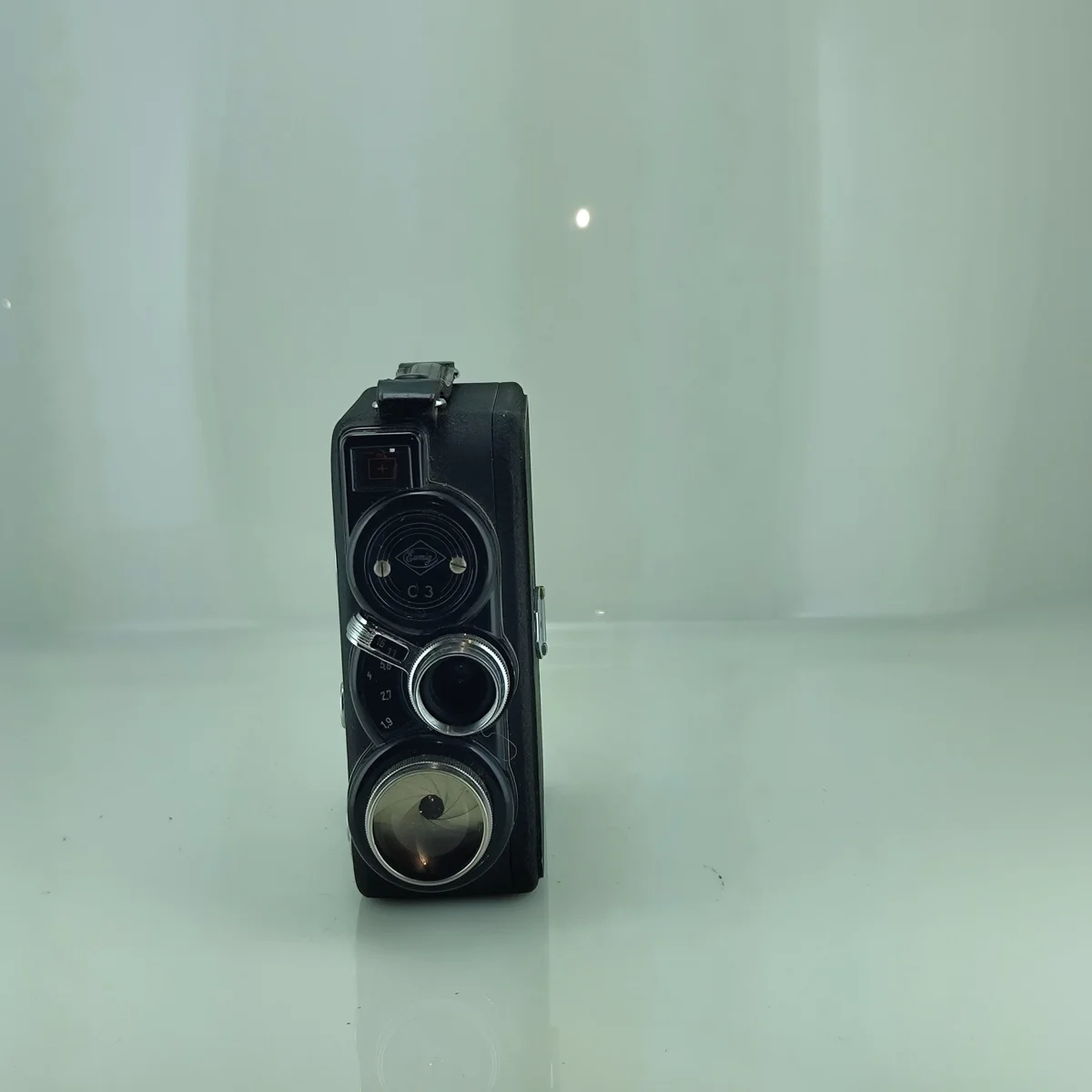
Eumig Movex 8C Double-8 Cine Camera, ca. 1950s — Rotar f/1.9, Original Leather Case & Strap
CHF 150.00
The design is instantly recognisable: a near-square, vertically oriented body clad in finely ribbed thermoplastic, housing a robust die-cast aluminium chassis. Two lens elements dominate the front face — the upper, smaller circle carries the "Rotar C3" designation and serves as the optical viewfinder; the larger lower element is the taking lens, fitted with a multi-blade iris diaphragm adjustable from f/1.9 through f/11. A bright-frame indicator window sits above the finder at the top of the front panel. The operating side carries two knurled dials — one for the footage counter, one for frame-rate selection (positions A/B/C/D corresponding approximately to 8, 12, 16, and 24 fps) — alongside the shutter-release button. The base incorporates a standard tripod socket.
A detail worth noting for prospective buyers: the motor-wind key on this particular example is a flat-blade type, visually distinct from the concentric-ring winding knob — typically inscribed "Made in Austria" — seen on the majority of Movex 8C cameras documented online and in reference literature. This may reflect a genuine production variant from a specific manufacturing batch, a running change introduced during the model's production span, or the possibility that the key is a period replacement. The functional role is unchanged, but collectors seeking a strictly matching example should examine this detail in person or request additional close-up images before purchase.
Inside, the film compartment accommodates standard Double-8 daylight-loading spools; two reels are included with this lot. The spring motor drives a rotary disc shutter and film-transport claw. The mechanism appears structurally intact, though lubricants will have thickened with age — a full CLA is strongly recommended before loading film. Standard Double-8 stock remains available from specialist suppliers, making this a potentially usable, not merely decorative, piece of photographic history.
A particular highlight of this lot is the original brown leather ever-ready case with full-length shoulder strap. The case retains the factory-printed depth-of-field and film-speed conversion table mounted inside the hinged front door (covering Scheiner, DIN, ASA, and Weston scales), alongside a handwritten note — "Kodak Farifilm 12/10 DIN — N. Rüegger" — providing a charming first-owner provenance detail that anchors the camera firmly in Swiss amateur filmmaking culture of the 1950s.
Cosmetically, the body presents in honest VG condition: light edge wear to the plastic shell, a small verdigris spot near the film-door latch (superficial), and well-preserved chrome overall. For display or collection purposes the piece is complete and highly presentable; for cinematographic use, a service is warranted before threading film.
Material: Black ribbed thermoplastic body, die-cast aluminium chassis, chrome-plated metal fittings; original brown leather ever-ready case with shoulder strap
Condition notes
Overall condition grades VG (Very Good) cosmetically. The ribbed black body shows light scuffs and minor paint loss at edges and corners, consistent with decades of regular handling. A small but clearly visible spot of verdigris (green oxidation) is present on the rear panel near the film-compartment latch — superficial in appearance and unlikely to affect function. Chrome trim on the lens panel and control dials is largely intact with only minor spotting. The original leather carry strap is present and supple, its fittings sound. With the film compartment open, the spring-motor mechanism and two daylight-load spools are visible; no obvious corrosion is apparent inside the gate area, and the aperture blades appear clean and intact. The original brown leather ever-ready case shows honest age wear — exterior scuffs, slightly abraded edges — but retains its shape, with both the hinged door and shoulder strap fully functional. The factory depth-of-field and film-speed reference table inside the case door is present and legible. The motor-wind key on this example is a flat-blade type rather than the concentric-ring winding knob seen on most documented Movex 8C examples; buyers should inspect this detail in person to confirm originality. Spring-motor function is unverified; a CLA is recommended before cinematographic use.